



















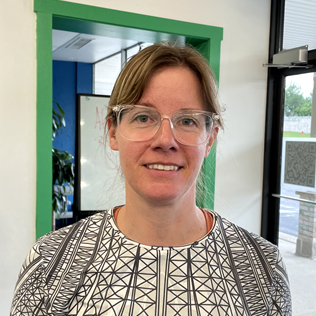



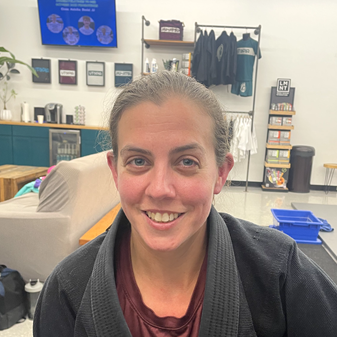



























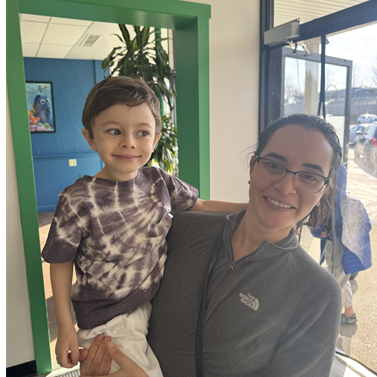


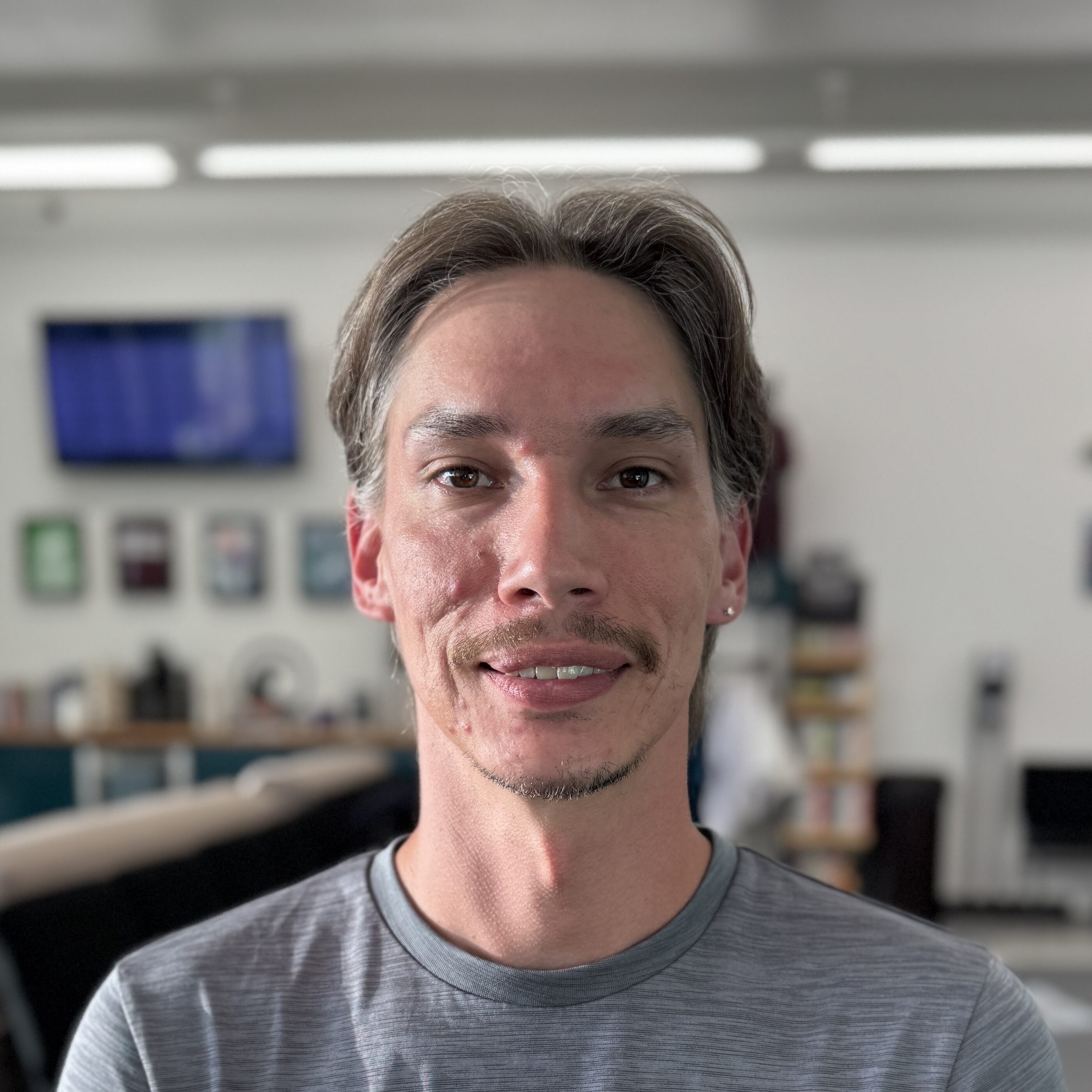

Deb Pokel walked her dog in the parking lot for 15 minutes before her first BJJ class. She was 59. She’d been a runner for three decades, lifted weights, raised five kids, built a business with 110 employees across 13 locations. None of it prepared her for the first warm-up. She spent it fighting back nausea. “If I throw up in front of these people, I’m gonna be so humiliated.”
Ava Govek sat in her car for 30 minutes before her first class. She was 14. Her mom hated that she was doing it. A friend had suggested cardio kickboxing. She walked in anyway, shaking.
Different women. Different decades. Different kind of first-day panic. Same choice to come back.
The first day is supposed to feel like that
In Episode 21 of Inside the Wave, Perry sits down with both of them. Ava is now a four-stripe blue belt, six years in, and graduating with her master’s in May. Deb is a white belt who just hit her one-year anniversary. They don’t share a generation, a life stage, or much of a schedule. They share a gym.
Deb remembers her first class in detail. She couldn’t do a technical stand-up. Couldn’t do the grappler sit-ups. The warm-up alone almost undid her. She kept going.
Ava remembers shaking in her boots, thinking she’d be a natural because her dad had a kickboxing bag in the basement. She wasn’t a natural. Nobody is. That’s the point.
What women actually want from the mat
We talk about BJJ as self-defense. And it is. Ava is a sexual assault survivor who speaks openly about that being part of why she started. Deb keeps a concealed carry permit and said out loud in her first fundamentals class, “Gentlemen, this is why I carry a gun.” Her coach, Dan Monahan, was gracious. She laughed about it a year later.
But self-defense is the door, not the room.
What keeps women on the mat is something harder to name. For Ava, it’s six years of learning she belongs there. For Deb, it’s perseverance. It’s a word she uses without flinching. “I’m in a season of it’s time to continue the race.” She says her faith and her BJJ are getting pulled into the same thread.
Both of them talk about tenacity. Both talk about community. Neither of them talks about getting in the best shape of their life, because that’s not the reason.
The ice sprawl
One of the best moments in the episode: Deb, one year in, walking her dog on an icy boardwalk. Her foot slides. She drops forward, gets her forearms down, and slides into the grass. No broken hip. No bruised face.
“I was pretty happy to fall,” she said.
That’s a real-life application of BJJ that nobody markets, because it doesn’t fit on a poster. Muscle memory kicked in. At 60. One year in.
What men should hear
Ava said it plainly. “We’re not your rest stop.”
If you’re a man in BJJ and you’ve ever told a training partner you need a break so you’re going to go roll with one of the women, pretend you didn’t say that. Women can hear it. The newer ones especially. And if you’re rolling with a woman, don’t go all out, don’t apologize every five seconds, and don’t camp out in north-south. It’s a transition, not a resting spot.
Also: introduce yourself. Shake her hand. Treat her like any other training partner. If she’s sitting out and nobody’s rolling with her, ask. When you do roll, don’t go for submissions the first few times. Let her tell you when she wants the speed up.
Drew, one of Utopia’s coaches, does all of this on instinct. Ava named him without prompting. That’s what a good training partner looks like.
If you’re a woman thinking about starting
Find a gym that has a fundamentals program. Find one where the coaches watch the mat. Find one where the women already there have something to say about it.
Two days a week is the target. Anything beyond that is icing. Your first three classes will feel like too much. Your first month will feel like progress you can’t point to. Your first year will feel like Deb Pokel’s year, which is to say: hard, funny, bruising, and worth it.
You’re not ruining anyone’s workout. You’re not too old. You’re not too small. You’re not behind. The people already on the mat started with the same first-day panic you’re feeling right now.
Stream Episode 21 Now:
Transcript
PERRY: Welcome to Inside the Wave. Thank you, ladies, for coming on. I don’t know what episode this is. I think it’s like 21 or something like that. Today we have Ava, who’s been on the podcast before. And we have Deb, both students at Utopia, but with very different jiu-jitsu journeys. So I’m excited to talk about a few things with you guys today. One is your journeys in jiu-jitsu. And two is being females in a fairly male-dominated sport. And hopefully the listeners, the ladies, will walk away with some confidence that they can start jiu-jitsu and do jiu-jitsu. And I’m hoping the male listeners learn how we can better support you guys and be better training partners.
AVA: That’s the goal.
PERRY: Sweet. Deb, tell us about yourself. Just like, doesn’t even have to be jiu-jitsu related, but I know like UFC fan, late life entrepreneur, you, have you, do you skydive? I feel like you’ve skydived before.
DEB: I do not.
PERRY: I am shocked.
DEB: That’s one thing.
PERRY: Ran with the bulls. I feel like you’re kind of the person that would, all of that stuff.
DEB: Nope, nope, not a fan of bulls. And my dad was a pilot, so he always said, why jump out of a perfectly good airplane? So that’s not my gig. No, I’m not doing that. But not quite that exciting. But I did decide that I’m married. I’ve got five kids, five grandkids. We were just talking about I turned 60 last fall. And as I was launching into 60, unlike Cody with his freaking out about being 31. I thought, you know, it’s good. I feel good. I’m blessed. I’ve got great health. I’ve got a great family. And I wanted to do something for myself at that stage of my life after raising my kids. And I thought about getting my PhD. And that was pretty expensive. And I also didn’t realize, or I didn’t think that it would really help me in my career any further. So I watched UFC for the last six years or so, been a casual fan, attended several fights live. Very rarely miss a Saturday, and if I do, I re-watch the fights. And I had a son. I have a son that wrestled when he was third grade through high school. And I thought, you know, I want to stay in shape. I want to do something that’s really going to be difficult that I’ve never done before. I was a runner for 30 years. I’ve lifted weights cross country and track in high school, but never in a contact sport. And I just feel like I got this inspiration to give you a call. And it was mentally and physically probably one of the hardest things I’ve ever done. And that was, I just had my one year anniversary.
PERRY: Yeah, I was gonna say, you haven’t been doing it for that long yet. But you’ve been consistent since you started. And I think you also bring another cool perspective that you travel quite a bit. And you are you have a lot of confidence to go just like try new gyms and stuff like that. So you’ve stepped inside of quite a few different jiu-jitsu schools. How many schools do you think you’ve been to?
DEB: In the past year, in addition to Utopia, I tried two in northern Wisconsin, two in Rockford, Illinois, when I spent quite a bit of time there this summer for business, and two in Naples, Florida.
PERRY: I think you’ve dropped into more jiu-jitsu schools than I have. And I’ve been doing it for like 18 or 19 years. But that’s super cool. Ava?
AVA: Yeah?
PERRY: I think, I mean, we’ve talked about on the podcast before, but refresh our listeners on the Ava story. Yes, it’s completely different.
AVA: It is very different. I started early on in life compared to a lot of people. I started at 14, 15, came into the gym because a friend recommended the cardio kickboxing at the time. And I was kind of having less fun with volleyball, still wanted to be active. So I decided, why not give it a try? Hit some things. Should be fun. My mom freaked out. She did not think I was going to do it. She didn’t like that I was doing it. And that actually pushed me to commit to it more than I think I would have originally. So I did the cardio kickboxing for probably a year or two and then COVID happened and we had to sign up for classes and somehow I got registered for a jiu-jitsu adult class rather than the adult kickboxing class and when I tried to get it switched over it was too late and I was like no just come try it out. You probably did that on purpose. Yeah that’s my theory. And so I came and tried it out and I was like, Oh, this is actually kind of fun. But I was still like, almost 18. So still like a teenager didn’t want to be like touching grown men. And so I was like, this isn’t for me yet. So I stuck with what was in the MMA program. So the life like kickboxing and whatnot. And I did some of the women’s jiu jitsu classes that we had on like the weekends. And then, yeah, I did my first pancreation fight down at Primal, and I realized I needed a better ground game. So I decided to start doing jiu-jitsu more regularly then, came and joined like the adult classes, went away for college for a little bit in Stevens Point, did some Muay Thai, MMA, some more cage fights, and then realized I needed my brain. And so I heeded my father’s concerns and stopped doing Muay Thai and MMA and just started doing Jiu Jitsu and came back home to transfer down to Mount Mary and decided to stick it out at the gym and have been doing Jiu Jitsu ever since. So it’s been six years now that I’ve been at Utopia.
PERRY: That’s crazy. So, and you are currently a high-ranking Blue Belt.
AVA: I don’t know about high-ranking, but yeah, I was four-stripe Blue Belt. Just got it.
PERRY: That’s as high of a Blue Belt as you can be.
AVA: Yeah, but is a Blue Belt high-ranking? I don’t know.
PERRY: A high-ranking Blue Belt.
AVA: Yes.
PERRY: Yeah.
AVA: Yes.
PERRY: Very cool. So, really cool how you guys got involved and started in jiu-jitsu, but what has made you stick with it? so far. Like, what do you find the most appealing? Like, you came in on day one, and I know a lot of times, like, if people make it through those first few months, you know, they’ll be with us for a while. What drives you to continue to come into class, to keep doing jiu-jitsu, even after however many six years you’ve been doing it? Um, you know, even with all the traveling that you have going on, you could easily, when you travel back, I’m on vacation, I’m just not going to do anything. Right. But do you take the time out of your vacation to still go do jiu-jitsu? What’s your why behind it?
AVA: I think my why has changed a lot over the years, you know, and we’ve talked about my struggles with jiu-jitsu and life balancing and just going from being a young adult into like actual adulthood. It’s kind of changed. Originally, it was self-defense, right? And that’s kind of always the underlying, like I want to be able to defend myself, my future children, if anything should happen. Recently, though, it’s been more of a way to keep in shape. That’s been really what’s been getting me on the mat because sometimes the fact of self-defense just isn’t enough to get me there. So, you know, staying in shape, it helps that Cody and I are together and we live together. He’s a brown belt in jiu-jitsu. So on days that I don’t want to go, he drags me. But yeah, I think really right now, knowing that it’ll help me in the long run overall in self-defense, staying in shape, whatever it may be, and also the community, right? They always get me coming back.
PERRY: Cool. What about you, Deb?
DEB: You know, there are days where I ask myself, now why am I doing this again?
PERRY: I’m pretty sure we all ask ourselves that sometimes.
DEB: You’re kind of sore. You guys, it’s been a long time since you were white belts, but we were bruised all the time. I’m bruising less and less and they don’t hurt. It’s not like it’s painful, but people are like, is everything okay at home? Because yesterday I had a fitting for, I have a black tie event. So I had this formal dress and they were fitting me and it was a sleeveless dress and I had bruises all up and down my arms. And the seamstress was like, is everything okay? You know, you can give me the safe thing. I’m like, no, no, really, it’s just jiu-jitsu. But I really think it’s I think it’s the tenacity and the perseverance that I’m developing. And you’d think, well, you’re 60 years old, you’re in the fourth quarter, you know, how much perseverance do you need? But I really feel like, for me, my faith is really important and God just is prepping me always for the next thing and the next thing. And right now, for whatever reason, I’m in a season of It’s time to continue the race, time to continue to persevere and be tenacious. And there are times where, let’s say it’s a takedown or a throw, which doesn’t happen too often in jiu-jitsu, but sometimes. And I don’t like that. I don’t like being taken down. I don’t like being thrown down, but I get up. And it sounds cliche to say that, but I keep getting up in other areas of my life as well. You know, family struggles, marriage challenges, business disasters sometimes. You know, all the things that happen in life, I feel like this past year has given me the ability to continue to just keep on fighting and get up over and over again, whether it’s literally or figuratively, I just keep getting up. So for me, it’s that tenacity and that perseverance that really keeps me coming back. And I don’t want to miss because if I miss a whole week, Addiction maybe isn’t the right word, but I’m hooked. I don’t want to go more than a few days without being on the mat. And I will literally say to my husband, I got to get back on the mat. I got to get back on the mat.
PERRY: I’m pretty sure, and it’s been a while since I’ve had to take a couple weeks off, but I know even when I go on a long vacation, by the end of it, Aletha’s like, you need to go to Jiu-Jitsu. It clears your head, it makes you feel great, and I think that the big thing that I hear from you, You know, sometimes you’re the hammer, sometimes you’re the nail. I think jiu-jitsu teaches you that even though on days when you are the nail, you just keep coming back and eventually become the hammer again. And that happens like everywhere in life. You’re a late stage life entrepreneur. I’m sure you see a lot of that in your business. I know you talked about business challenges and Jiu Jitsu helping you deal with those. Not like directly, but teaching you lessons that you can learn within that as well. Do you guys remember the first day on the mat?
AVA: Yeah.
PERRY: You do?
AVA: Yeah. Well, and kickboxing.
PERRY: You probably remember your first day of kickboxing and your first day of jiu-jitsu.
AVA: I remember both. Yeah. So I’ve had a couple pivotal first days, I would say. My very first day in the gym, I sat in my car for 30 minutes before class, trying to convince myself to walk in, because I was so excited.
DEB: You got there 30 minutes early?
AVA: I got there 30 minutes early. I am a chronic early, like I get everywhere. My dad was always, cause he’s in a wheelchair, so it takes him longer. He was always be the first one there, last one to leave. Right. So that’s kind of how I was raised. So yeah, I got there 30 minutes early. I lived five minutes down the road at the time and I shake it in my boots. But everybody was so welcoming and the class itself went really well. It was way more cardio than I thought it was going to be. I thought I’d be a natural. We’ve had a kickboxing bag in my parents’ basement since I grew up and my dad would hit it when he was able to. you know, but then I did like structured class. I’m like, oh man, I am bad at this. And that kind of made me want to come back and do more. So that was my first one there. My second pivotal moment was when I transferred to like the live sparring, cause totally different game, right? You’re no longer just hitting a bag. Somebody’s hitting you back. And that was kind of like a wake up call. And like, I was oddly enough, okay with getting hit. I didn’t want to hit the other person. So it took them a while to get me to do more than just defend. But my first Jiu-Jitsu day, like I said earlier, I didn’t choose to do it. I was kind of told to do it. And Hannah was my first partner and she was great. I love Hannah. I miss her dearly. She was just a big bubbly personality. Reminds me a lot of FUDAB actually. And she was great. She walked me through it. And then I thankfully like Tanner and Dylan were training. And so, you know, I was scared, but I was super glad I did it. And even though I didn’t start it right away after that, it kind of planted the seed of, oh, this is something I could do and could possibly get good at eventually. And I’m glad I did.
PERRY: I don’t know. if anyone is ever a natural in Jiu Jitsu on day one. Jiu Jitsu is such a hard sport that like, yeah, you might be a natural, but you’re not going to realize until you’re like six months or a year in that like, okay, you are because the skill gap is so wide. Yeah, right. It’s Yeah, it’s just crazy. It’s always changing. I mean, there’s even days where I feel like I am great at jiu-jitsu, but then there’s days where I’m like, I don’t know anything at all.
AVA: As a three-stripe black belt.
PERRY: Yes. People say that all the time. The new person comes in, they’re doing fundamentals class, and I have to tell them all the time, I’m still learning. And there’s days where I feel like I don’t know anything. because people think that’s actually going to go away at some point in time and it never it doesn’t at least for me maybe for like gordon ryan or like those people that are many-time world champions but no i think for your your typical hobbyist or even you know lower rank competitor that stopped competing after a while like i don’t think that goes away But I think that’s why I love jiu-jitsu so much is because there’s always so much to learn. And when you do run into those situations where you don’t feel like you, you know, your jiu-jitsu is broken, or, you know, there’s knowledge gaps of like, I don’t know how to figure my way out of this puzzle. Jiu-Jitsu teaches you to look at that in a growth perspective, right? Versus like a victim mentality of, you know, I’m just going to beat up all the time. It teaches you how to take control of it. Deb, what was your first day like?
DEB: Well, it was, we just had a year anniversary. I was the only one that celebrated, but I noted the date because I have a journal that I keep track of some of this stuff. That’s cool. Working on, you know, what, try to learn a takedown, Deb. Try to get a couple escapes down. So I, and I love to read written word, preferably on paper. I mean, obviously I read a lot of digital content too, but it was March 26th of 2025. Oh, wow. So I walked in and it was Drew. I had the appointment with Drew and it was the fundamentals class and I was early, but I walked in early, had my dog with me. He’s like, you know, you can come back in 15 minutes. So I took my dog for a walk and came back in. And Dan Monahan was my coach who I love and adore. I miss him. Hopefully he’ll be, I have seen him. He has rolled a couple of times. Um, recently I had a chance to be with him and he was just gassed and he was like, oh, it’s the best day I’ve had in a long time. I was like, I’m so glad you’re back, Dan, but he was very kind. And, um, I was struck by the physicality that I pride myself on being in pretty good shape, but this is a totally different cardio game. And even the drills, I couldn’t do a technical standup. I mean, I couldn’t just, I couldn’t do those wrestlers, you know, grapplers. Sit-ups. Sit-ups. And I thought, how did I get to this point? And Dan said, well, you know, when you’re at home watching TV or, you know, every time you get up off the floor, try to just get up without your hands. And I’m thinking, I don’t usually sit on the floor. It’s just not a thing that I do. But just my first wins were, hey, I can do a technical stand-up. Yeah, the warm-ups. Hey, I can get through the warm-up without thinking I’m going to throw up. I mean, that very first day I thought, if I throw up in front of these people, I’m going to be so humiliated. I was that gassed and embarrassed by it, but I just kept doing it, kept doing it, and everyone was so kind. And no one was judgmental. You know, no one laughed. I have a son, my youngest son, who thinks it’s, you know, he’s like, Mom, you’re messing up everybody else’s workout. You know, they don’t want to work out with somebody like you. And he kind of got in my head a little bit. I’ve gotten through that since then, but he pretty much feels like men should be training with men and women with women, which we’ll touch on a little bit, I suppose. I was so struck by the respect and the non-judgmental character of the people that were there. And I’ve tried to continue that when new people come in. I tease Drew all the time, and I might have said it to you once, but I’m like, I should be your director of I don’t know, the orientation, because there are things that I know because I’m still so new that I feel it’s important to explain to them, especially women that are coming in. We just need a little more explanation sometimes. So anyway, that was my first day. I never looked back. I mean, I just kept coming back time after time and try to get there two, three times. Usually twice a week. Sometimes I’m traveling, you know, so it averages out to about twice a week.
PERRY: I think most later stage people in life, like two days a week is even sometimes challenging to do between kids, family, job, career, spouse, partner, whatever it might be. I think I tell every new student, two days a week, that’s what you aim for. Everything beyond that is icing on the cake, unless you’re trying to be a world champion or you have all the free time in the world, just two days a week. What is it like in general, just training in a very male dominated sport, right? Like the days you go to class and you know, you’re the only woman in class, or maybe when you visit a gym and you’re the only woman there. I mean, when I first started, we didn’t have a lot of women in the gym.
AVA: We had like almost no women in the kickboxing program. And we definitely, I think Julie at the time was the only other woman in the sparring program, particularly. Like cardio kickboxing, we had the moms that had their kids in jiu-jitsu on the other mat. But sparring was really my first introduction to this is a male-dominated sport, right? Because I see the kids and there’s a bunch of girls on the mat. You know, sometimes more girls training in the kids’ classes than boys.
PERRY: I mean, I think we, in our kids’ program, This is just my hunch.
AVA: I think we have more girls than boys.
PERRY: But based on the classes that I teach, we have more girls than boys.
AVA: Yeah, which is super cool to see, especially as somebody that does coach occasionally, right? So that up-and-coming generation is making it more of a co-ed sport. But when I first started, man, I remember I had to fight really hard to Not get respect from people, because like Deb was saying, everybody is so kind in our gym, but to feel like I belonged there. To feel like, like Deb was saying, like I’m not messing up their workout. And that was something I had to get over for a really long time. And the kickboxing, like MMA portion of it was, these dudes could knock me out if they wanted to. Am I really giving them a challenge? But you know, you find your partners that work really well with you and you just keep showing up. And eventually you do become a force to reckon with, for lack of better terms. But especially in jiu-jitsu, right? That was the biggest thing that originally turned me off to the sport was I didn’t want to train with the men. I did it as like a sexual assault survivor, right? Like all these other things. Like I do not want to put myself in compromising positions with men. And so I only did the women’s jiu-jitsu.
PERRY: which is interesting because you are there to become better at self-defense, right?
AVA: Exactly, self-defense, right? And so you need a realistic viewpoint. And I think that finally clicked in my head of, I can’t just be training against women. In theory, for self-defense, a woman probably isn’t going to be the one attacking me or somebody that I need to worry about, right? And so I actually I went from only training with the women to now, I hardly ever train with the women. I mean, we have a really good women’s group, right? We have probably 15 women that are consistently training now.
PERRY: I feel like we’re up to the point where every class, we have like four or five.
AVA: Four or five, yeah. I mean, Thursday night, we almost outnumbered the men, which is really cool to see. And we’ve done our ladies’ takeovers nights and stuff. Yeah, I mean, and now I do, I still do a good mix of both, like I’ll train with the women and whatnot, but when I’m really trying to work, I’ll go with those upper belt men because I feel like our gym has really created a culture where a lot of the guys know how to roll with women to still give them a challenge, but also being respectful and not just beating the crap out of you. And, you know, they also do a really good job of, like, reassuring, like, no, you actually are, like, getting me a good workout in, too, kind of thing. So it was very daunting at first, but now, I mean, I wouldn’t trade it for the world. And maybe it’s just our gym culture. You know, I have trained at other gyms, and I’ve seen very, a lot of, like, similarities in it, but I know that’s not the case all over the board, so.
PERRY: Tab, what about you?
DEB: Well, I have a very different perspective because I’m thankful I haven’t been through some of the stuff that you have been through. And I have a lot of friends that when I bring it up, they’ve had, you know, past trauma that they don’t feel comfortable. or they have germ issues or they don’t want somebody sweating on them, you know, that kind of thing. That is the wrong sport for you. Yeah. So when I ask them, you know, would you like to come and they hear about their, you know, they get a little queasy for one reason or another. So I don’t have any of those issues. Now I’m a boy mom, you know, I have two girls and three boys. I had four grandsons before I finally had a granddaughter. I own a franchise that’s a barbershop. I’ve got 110 barbers and stylists that work with me and literally thousands of male clients across 13 locations every week. So I deal with men a lot. And I started my career with Northwestern Mutual when I was 19 as a college agent. This was back in the 80s, friends. and very male-dominated culture. I was one of the few women at the time. So I’ve worked in that corporate culture. I feel very comfortable with men. I love men. I respect our differences. And I think that for me, I didn’t have any issues with, maybe it’s my age. I didn’t feel, it’s a workout. Like the great Dan Monaghan says, it’s only weird if you make it weird. That is true. That is true.
PERRY: The challenge is we have a lot of people that make it weird.
DEB: Oh yeah. See, and I have a fun weird. I’ve not experienced that. It’s like, you’re wrestling, you’re grappling. So you’re going to touch each other’s parts, but I don’t. Do you have any issue with that? I mean, I’ve already had to apologize. I’ve never really seriously hurt anybody, but sometimes you… Accidents happen. …say you’re sorry. Yeah.
PERRY: Happens.
AVA: It does.
PERRY: Do you think there’s pros and cons being a woman on the map? What are they? I’m just curious.
AVA: I think, I mean, the main, the biggest pro that I can think of is like, you get a realistic look at, can I actually defend myself? How would I actually feel or react if a man were to challenge me, right? Or something were to go wrong. And I feel like that’s nice because you don’t necessarily get that with some of the women. You know, being one of the highest ranking women in our gym, it’s like I get a good workout in with all the women, but it’s not to the point where it’s like, and no disrespect to any of our women, right? They’re all great competitors, great teammates, but it’s different than when I train with the men, right? I get more of a realistic look. Yeah. at it but I feel like on the flip side of that too right one of those cons is like always in the back of my head am I ruining your workout am I taking away from what you’re doing am I right and I know that’s not the case because nobody in our gym has ever made me feel that way I’ve just made myself feel that way and after talking with a lot of women you know I feel like that’s a common Thought for a lot of women is especially these men that are higher ranking and they’ve been there for the longest time You know, it’s like I don’t want to take away from you getting better and I almost feel like sometimes like okay This is something I have no clue what I’m doing, right? For example, Drew and Cody love them very much, right? They’re my favorite training partners. I train with them all the time and And you, Perry, you are also one of my favorite training partners, but for like techniques, right? I usually partner with Drew or Cody and Monday night I was totally out of it. We were doing, Paul was showing us like kind of deep half, but not really. I don’t know. It was some, like, entryway. Middle half? Yeah. Oh, no. It was something where you had to spin around the leg and elevate it. It was weird. And I was not grasping it. I could just see on Cody’s face that he was just so frustrated with me. And so I had him and Drew go together, because I’m like, I’m just not being a good training partner. And in that moment, I’m like, oh, did I just take away from, like, you getting better? But that’s not the case, right? Like, everybody, a wipeout male would do the same thing.
PERRY: And I think something to keep in mind for like jiu-jitsu people listening is one of the best skills you can develop in jiu-jitsu is the ability to learn from anyone.
null: 100%.
AVA: Right?
PERRY: Like, okay, maybe you weren’t a good training partner for me to learn that technique, but that was a learning opportunity for me to learn how to be a better teacher. Yes, and that’s what Cody said. And how to help you. At the moment, yeah. There’s always some little golden nugget somewhere.
AVA: Yeah.
PERRY: I remember one of my first times traveling and doing jiu-jitsu in a drop-in and it was at a gym in like the Phoenix area in Arizona. And I went to a class and the class was taught by a blue belt. And I think I was a, I don’t know, probably a purple or brown belt at that time. And I learned a ton. He had like a very unique game, much different than mine, way different style than, you know, what I saw from my coaches. And I learned a ton from it. But I think that’s just something jiu-jitsu students need to keep in mind. I think that’s something that new students need to also understand.
AVA: Don’t let your head get out of your head.
PERRY: You know, we didn’t have it when you started. You actually went into it, but our fundamentals program is actually for that reason, right? So, you know, the new person’s not getting partnered with the super experienced person that, not that need to be like baby, but they need a lot more guidance, right? So we put people in our fundamentals program because that’s the point of it is everyone is brand new and there, or at least is there to work on the basics. But yeah, it’s tough.
AVA: The only other con I can think of, and this is just being a younger female in jiu-jitsu, you know, you go to certain gyms, thankfully not our gym, because we have a great gym community, but you get hit on a lot, like during roles.
DEB: Oh yeah, see this doesn’t happen to me. The amount of time. The old lady strength, the old grandma thing, big turn off. Annika and I have talked about it.
PERRY: I can’t wait until it happens, Deb, and then you come to, Deb’s gonna come to me one day and be like, you won’t believe
DEB: It did happen to me in Naples. A 68 year old guy. He kept, he’s like, I don’t see a wedding ring. I’m like, well, I don’t wear my wedding ring.
PERRY: Sir, you’re too old for me.
AVA: That’s so funny. But yeah, like just like some, right, you go to gyms with a younger population or even even not a younger population, I’ve been hit on by guys that could probably be my father. And it’s just, they make it weird and it’s unfortunate because, like we mentioned, the sport shouldn’t be weird.
PERRY: All right, top takeaway from this, gentlemen.
AVA: Don’t hit on your training partners.
PERRY: No.
AVA: I can’t say that.
PERRY: I’m dating somebody. They’re there for a workout, but let it organically happen.
AVA: Yes, 100%.
PERRY: Yeah, like be at jiu-jitsu to do jiu-jitsu.
DEB: Yes. I think the biggest con for me is male-female and weight differences. That’s true. I mean, I learned this in Naples last week that It’s a Brazilian couple that started this gym and it’s very traditional is the way I guess you kind of explained it to me. You get there, you line up by rank. There’s a 30 minute warmup and the warmup is push-ups, pull-ups, the ones where you hang from the bar and you pike your legs. I can’t do that. I’m working on that.
PERRY: That’s very Brazilian.
DEB: Oh yeah, you’re doing squats, all these, I mean, the 30 minute warmup, I’m dying. And there’s no air conditioning, it’s Florida, it’s hot. So it was a good, I lost a couple pounds there. There you go. But they also are very careful with who they pair you with. The black belt, the gentleman that teaches the class that I go to, he will, if there’s usually no other women there, I have to go with him or he’ll maybe pair me with a high-ranking belt that he knows is going to be careful with me, but he will not let me go with the younger, bigger guys. And he said this to me last week, he said, They have weight classes for a reason. And there’s a reason why women compete against women and men compete against men. So in training, he said, I’m your lifeguard. Like I need to make sure that everybody’s safe here. And that was something that really struck me that there’s just the physical differences between men and women are so great that I don’t want to say it’s a con, like I feel badly about it, but it’s a reality. So for self-defense, like for me, My very first class, very first fundamental class with Dan Monahan, I blurted out with no filter. I can’t even remember what we were doing. The winner, you know, what are they called? Drills?
PERRY: One of the drills games that we do, yeah.
DEB: And I don’t even remember who I was partnered with, but I literally said out loud, gentlemen, this is why I carry a gun. And, and sweet Dan was like, well, hopefully, you know, we can teach you some skills and you won’t feel that way. I’m like, I’m never going to feel that way because your lungs are bigger, your muscles are stronger, your bones are more. I’m like, there’s, there’s no way I can compete with you or maybe even defend myself.
PERRY: Jiu-Jitsu’s, ah. Of all of the grappling martial arts, it’s the one where gender, size, strength doesn’t matter as much, right? And I think with a good set of jiu-jitsu skills, you guys against an untrained person will, even if they’re male and larger, will do pretty damn good.
AVA: For sure.
PERRY: But I tell people all the time too, I would also rather be the bigger and stronger person in any fight. It doesn’t matter as much as it does in most contact sports. But yes, it is very helpful to be 215 pounds and jacked and 28 years old. I do think one thing that we do, like I don’t feel like I need to lifeguard as much as you said, and I certainly do. I think in our programs, you know, having that split between fundamentals and how we approach fundamentals with like very minimal open sparring, no open sparring. creates a much safer environment, and then we’re essentially training those people in fundamentals to be good training partners by the time they get to advanced class. And by the time they get to an open role, they realize that, oh, I’m a big person that can’t control myself. Maybe I shouldn’t go with the brand new person or the smaller person or, you know, whatever it may be.
DEB: That’s a good point, and I do agree with that. I think there isn’t a fundamentals class at this gym, so he takes one look at me and sees my white belt. He just wants to make sure. Some of these guys are 28 and 200 pounds.
AVA: Yeah, they’re like, you know, big dogs. I think they’re lap dogs, right? That’s what I like to use as my analogy. They think they’re being gentle. They’re really not. But I have noticed, you know, before Fundamentals program, we used to give the new women a list of people to avoid. Like, we have a group chat of all the women in it before, like, women that no longer train with us are still in it. Any new woman that signs up, we automatically put them in. And we used to have a list of, do not roll with these guys. They’re going to hurt you. Wait until you feel more confident. We don’t do that anymore. I mean, there are a few people where we’re like, hey, maybe stay away from that person for a while, you know, like they’re newer or they just don’t realize they spaz out or whatever it may be. But since the implementation of the fundamentals class, that list has gotten quite a bit smaller, if almost nonexistent.
DEB: Well, and your team, you know, Drew and Vern pulled me aside a month or so ago and they said, you know, we really like you. We really like having you here. And we’re concerned that you’re rolling with people you shouldn’t roll with. And I didn’t know I could say no. And I thought like as soon as anytime anybody says you want to roll, I always say yes, because I didn’t want to be a wimp. Yeah, I didn’t want to be that. Oh, it’s that lady that doesn’t want to roll.
PERRY: I say no to people.
DEB: Well, I didn’t know that. You know, that was now I know. But at the time it was, you know, we had some really big guys this summer that were I won’t name names, but very tall, very athletic, very muscular, very heavy, one over 300 pounds. And I’m like, yeah, sure. And they’re like, Deb, you’re 125 pounds. Don’t do that. Yeah, don’t do that. No is the complete sentence.
AVA: That was probably my most valuable jiu-jitsu lesson in my six years of training. You don’t need to tell them why. Just say no. I’ve only had to have, I’ve had one roll stopped in the middle of it and I didn’t even stop it. One of the guys was watching it and he came on the mat and he like, He didn’t pick the guy up off me, but he’s like, no, he’s like, I’m not watching that. And then afterwards they were like, you can say no to like some of these newer guys or whatever.
DEB: And so see, that’s where the director of new enrollment. I didn’t know that. Now I know. Yes.
PERRY: What do you guys wish men understood about training with women that they might often don’t realize? Who?
AVA: I wish, I mean, I know we talked a lot about like size difference and things like that. On the opposite end of that, I wish some guys wouldn’t or would know that we’re not as fragile as some of them seem to think.
PERRY: I beat you up a little bit sometimes.
AVA: Yeah, like you don’t go ahead and try. Yeah, like it’s like you don’t need to be afraid of rolling with a woman unless they’ve like told you no multiple times then get the hint. Don’t keep asking them to roll, right? But women are there for a reason You know Everybody has their own we have some women in our gym that only train with women and that’s totally fine But the majority of women I feel like now in the sport are okay rolling with men or they’re there to roll with men to get that Realistic feel and you don’t need to be afraid of rolling with a woman. Don’t go all out. We’re not another man, right? Testosterone bigger muscles, whatever it may be just I just rolled out but I’ll out with you on Thursday I felt like I’ve never done a day of jiu-jitsu in my life No, it was good. It was good, Perry. I needed it. I was riding a high.
PERRY: But I didn’t smash you.
AVA: You didn’t smash me.
DEB: You just out-techniqued me, which is good, and I need that. And I don’t even really know what smash you means, but sometimes… Putting off their way. a gentleman on Thursday, I said, some moneymaker right here. I might be old, but I have a career. I talk to people that smashing your face thing into the mat. I’m not a fan of that. I’m going to tell you that, like, use your common sense.
PERRY: But so I think there’s like three things that happen, like you can be completely dominated by technique. You can be controlled so hard, like you just can’t do anything like I can smash people inside control and like put all my weight on them and tap them out. Yeah. Which is scary sometimes, right? If someone’s just completely… Sometimes it’s actually easier to just be tapped out and swept a billion times softly than it is for someone to completely, like, manhandle you in a way that… Maybe I shouldn’t say manhandle on the spot. But, like, manhandle you in a way that you can’t do anything.
AVA: Yeah.
PERRY: Like, I can just stick someone to the ground and do whatever I want sometimes. Um, but I think the thing that we need to watch out for is the, and I think this is what you guys are alluding to a little bit, is the people that don’t have a lot of control of their own bodies, right? Like there, there’s one thing of like putting pressure on the side of your face. There’s another thing rolling with the person that doesn’t understand where their elbows are in space and will accidentally hit you in the face. And those are more the people that I avoid putting newer students or smaller students with is like the people that just don’t understand how to control their own bodies yet. And some people learn it quick, some people it takes a long time. But that’s always something like I’m always watching out for too.
DEB: I don’t see this very often, but sometimes I’ll roll with a man who will apologize a lot. There’s a lot of, I’m sorry, I’m sorry, I’m sorry. It’s like, it’s a context sport. I’m good. I’m here for a reason. If you bump me or touch something, it’s okay. Let’s just keep it going. So I think they’re being polite, but they don’t have to say, I’m sorry. We have a lot of very polite men in our shift.
AVA: We do. We have a lot of respectful men.
PERRY: punched a woman in the boob before on accident. And then I’ll say I’m sorry. The same way like if I need a guy in the balls, I also say I’m sorry.
DEB: And that’s one thing. I just feel like sometimes it’s, oh, sorry, sorry, sorry. Like every little thing. Like you said it, we’re not that fragile.
PERRY: I know what I signed up for.
DEB: But don’t put… I think, too, many men don’t understand how strong they actually are. And so even though they’re giving us just a little bit, sometimes it’s too much. They’re just too strong.
PERRY: So you’re going to get me on my rant about people in jiu-jitsu that are strong. Sometimes big people, them not using strength is more strength than what you have.
null: 100%.
PERRY: Right? Like a 215 pound male Deb, them not using strength is still more strength than what you have.
AVA: Yeah.
PERRY: So people need to be aware of like, I need to not not use strength. I need to use that person’s level of strength.
AVA: Yeah.
PERRY: Right? Or better yet, just move instead of using strength. Right? Use connection versus like squeezing.
AVA: technique.
PERRY: Would be nice sometimes. What else about men?
AVA: I feel like I often have heard in the past men like, you know, like they talk like locker room talk on the mat, which is totally fine. But then when it carries over into how they like think about the women and like rolling with women, like I’ve heard like, oh, I need a restaurant. I’m going to go roll with one of the women. I’m like don’t don’t say that because then I’m gonna roll with you and I’m gonna try to choke you out like you’re gonna make me mad you know and so like I think they need to know like we’re not your restaurant don’t get cocky about it because you’re gonna run into a woman who’s been training for a very long time and like some of the female like brown belts purple belts like They’re killers.
PERRY: I also feel like the people that are saying stuff like that are the ones that are not staying with Jiu-Jitsu very long.
AVA: Exactly. Yeah, they’re usually the white belts or brand new blue belts that have wrestled in the past, whatever it may be. So we’re not your restaurant, but also you don’t have something to prove with us, right? I get that sometimes where, again, four-stripe blue belt I roll with, a newer white belt man, and they’re rolling balls to the walls. And it’s like, why are you doing this? You just rolled with another blue belt man that you were rolling just fine with. And like, I can, I’m at the point in my jiu-jitsu where I can, I may not be able to, I can’t outstrength them, right? But I can control the roll. I can tone them down a little bit. I can damper what they’re doing. You know, I may not be able to get on top and submit them, but I can at least slow them down a little bit and change the pace, which is really all I want. I don’t need to be out here breaking people’s limbs. I need to just be able to control them from hurting me. And so thankfully, I’m at a point where majority of my roles with brand new blue belt men or white belt men, I could do that with. But it’s always without fail. You know, unless I’ve rolled with them in the past, it’s like, you don’t have something to prove. Why are you like, you know, like, don’t don’t stiff arm it. Just just relax. Like, you’re OK. Don’t go on either end. You know, we’re not your restaurant, but you also don’t have something to prove.
DEB: I think, I mean, I just have a great respect and understanding. This, again, is probably perspective and just life experience of differences between men and women. And I just think they should be celebrated in life. But when I’m on the mat, I don’t, I honestly don’t think about if it’s a man or a woman. I don’t know if I’m weird like that, if that’s a weird thing, but I, I’ve just tried to look at it as this is another training partner and I just don’t, These questions are not something that I really ever thought about because I just go in as, we’re training partners, I don’t, sometimes I don’t even know, a lot of times I am the only woman, but it doesn’t dawn on me and I just don’t really think about it. It’s like, this is the situation and this is what we’re doing. I think men, for the most part, are very respectful, especially Utopia. I mean, I just can’t say enough about the respect. Maybe that if a man would ever feel offended if I said, no, I didn’t want a role, which I rarely say no, but I wouldn’t want them to be offended by that I guess. I just think that we’re both amazingly created and men are just fabulous for lots of reasons and women are fabulous for different reasons and we can do this together and get a good workout. For me, it’s aging well, learning how to get up off the floor without my hands, learning how to fall. Oh, I fell yesterday on the ice. Was it yesterday or the day before?
PERRY: I’ve never heard someone so proud that they fell.
DEB: Did you break fall? Did you break fall? It was Thursday when we had all that, the ice. I was out walking my dog. and I don’t do anything slowly, you know, so I’m walking. The grass was crunchy and I could see all the ice on the trees, but I got to a boardwalk, a wooden boardwalk, and it had an incline, and I took a step, and I mean, it was glare ice, and I didn’t realize it. I’m trying not to move too much here. I instantly went into a sprawl, one wrestling class that I’ve had, and forearms down. I fell forward. I fell forward. I didn’t fall back, so I didn’t break fall. But I instantly sprawled, put my forearms down instead of posting, and I just slid down the icy boardwalk into the grass.
PERRY: So there are forward breakfalls and side breakfalls and back ones. And it sounds like you executed a very good one.
DEB: I was so proud of myself and I jumped up and I thought if this had happened a year ago, I’d be crying on that boardwalk for like 10 minutes hoping somebody would come by and find me. So it was like a real life application of my jiu-jitsu skills. Muscle memory kicked in. Yeah, definitely. Yeah. Yeah, I was pretty happy to fall. Yeah. I didn’t get hurt. I didn’t get hurt. People my age can break a hip when they fall, Keri.
AVA: People my age can break a hip when they fall. OK, some days I feel like I’m 22. But yeah, I don’t know. I feel like going back to your point about like, don’t be offended if a woman says no to you. You never know. I mean, for the longest time, I was only rolling purple belt men and above because I was having some PTSD things, right? And like, even if somebody isn’t a survivor of whatever, you know, everybody has their own reasonings. And I feel like sometimes you hear like, oh, she wouldn’t roll with me. You know, she must not like me or must be afraid I’m going to hurt her. It’s like, that’s not always the case, you know. Men say no to people for a variety of reasons. Women do too, you know. It doesn’t mean they’re afraid you’re gonna hurt them or they don’t think you’re a good training partner. It could just be, you know, there are a lot of levels to the sport for anybody, right, mentally, a lot of mental barriers. But because it is a male-dominated sport, even more so for women, I would argue, right, getting, there’s even more barriers mentally there. And so don’t be offended if they say no.
DEB: Take it on the chin. And to your point about more girls in the youth program, I mean, I’m hearing and reading that women’s wrestling is really coming up. And my feeling is that for MMA, UFC, that’s going to be the ticket in the future, that we’ve just got to get more people grappling, doing jiu-jitsu, working in mixed martial arts, more women, I should say. And that’ll improve the women’s game. in the future.
AVA: Shout out to Ellie and Audrey. They just finished their women or girls wrestling season and both did fabulous and they were utopia student-athletes since they were real small. They kick ass. I’m scared of Ellie. She beats up grown men.
PERRY: She’s so good.
AVA: And Audrey.
PERRY: They’re both really good. Yeah. Let’s talk about just like So general positions in jiu-jitsu. So one thing that you know, I think about especially when I’m working with a new Especially women right is like some positions when I’m working with them. I’m just Consciously looking out for things like because if they have been yeah through like a self-defense situation or trauma or whatnot like mount positions, going for chokes on them right away, can definitely trigger vulnerabilities, right, where it’s, it makes it instantly a, you know, fight or flight response for them. Ava, like with your background, I know you’ve had experiences with that, you know, being in that position, right? I think that’s one good thing for all, especially men, to look out for, especially with a, rolling with a new girl or a new training partner. But are there other positions in Jiu Jitsu? that you think men should, not necessarily like avoid, but maybe don’t sit there forever, like North-South feel really weird doing to a female or like a stack pass sometimes. Although that’s almost more weird than doing it to a guy because your face is like right there. But like, are there positions that you’re like, I would just pass on this, I’m doing this to, I feel like especially when you’re doing it with like a female that you can yeah you can you can beat right like yes if I’m going with a brown belt or black belt female that’s gonna whoop my ass like I’m gonna use all the positions in my game to do it use everything you can yeah yeah I mean I feel like the biggest one that comes to mind like you said north-south
AVA: I, I have purposely learned not to give that position up. I do not want to be there. I don’t even let people get there on me.
PERRY: I mean, it’s not a fun position to be in in the first place, but like, yeah.
AVA: And a lot of people use it as like a transition, but some people sit in it and I feel like maybe don’t do that with a woman. Right. For obvious reasons.
PERRY: Or at least do like a chest on face versus like a crotch on face. Yeah.
AVA: The only other one really that I can think of for like, I mean, widespread reasons, right, would be high mount and S mount specifically, where you’re like sitting on their face or sitting, well, sitting on like their high chest, neck, you’re not supposed to be sitting on their face. But right, some people, especially when they’re just learning it, they’ll get up there and it’s like, you’re sitting on my jaw trying to break my arm and this is awkward if you’re a man, you know, I struggled personally.
PERRY: It’s like you’re also bigger and stronger than me. You don’t have to be doing this right now.
AVA: You can beat me with 100% techniques. Yeah. And so I feel like those are the two biggest like general ones for me specifically. It was really hard. to get past like somebody being in my closed guard. I do not play closed guard a lot just because of the nature of like the ways I was assaulted and it’s just it’s one of those things I’m like I’ve gotten through it enough now where like I actually taught for my blue belt for the technique that I taught was the one that I used to defend myself and it worked right and I teach the women that every time I do a women’s self-defense class because it is a really good technique um but I feel like I mean it’s tricky because everybody has their different ways and they’ll work through it in their own way but yeah I feel like north-south and then like high s-mount is probably one step Safe to stay away from.
DEB: Asimone is just horrible, no matter what. I literally will just tap like, no, I don’t want this. Yeah. That’s maybe a wimpy thing to say, but I don’t like that at all. Yeah. I don’t care who it is, man or woman. I don’t. Moneymaker right here. That’s not. Get off my face.
PERRY: I mean for me it’s not sexually vulnerable by any means, but like your arms are like, your face is wrapped.
AVA: It’s the feeling of being trapped.
PERRY: And like no matter what, they’re so high up on you, no matter what you do with your lower body, it’s just kind of like flailing about like a fish. Yeah. One thing that we did do at Utopia, that a lot of other gyms don’t necessarily have this rule is rash guards under the gi always.
AVA: Oh yeah.
PERRY: And I primarily did that for the women to make it inclusive. I also did it because I don’t need to be flossing my teeth with another man’s chest hair when they’re in the mount. But it’s likely something you guys don’t ever think about because we do that now. But other gym owners out there, if you want to create an inclusive environment for women, they probably don’t want another man’s chest hair all up in their face.
AVA: Yeah. And it also, it leads into that double standard too, right? Where it’s like, oh, if you don’t enforce rash guards, a lot of women I’ve seen, especially younger women, I mean, I’ve talked to a couple of our teens just wear sports bras underneath their geez. I’m like, don’t, nobody wants that. Like.
PERRY: Yeah.
AVA: Wear a rash guard, wear a t-shirt.
PERRY: And this goes to like, so another rule of mine in Nogi is like, you need to have sleeves so you can’t wear one of those sleeveless rash guards because I also don’t want your armpit hair on my face either.
DEB: And if you’re gonna wear it- Promise I’ll shave next time.
PERRY: And this has gone, this fad goes in and out, but tights, spats, wear shorts over the top. In training, if you’re going to go compete against men, fine, just wear your spats with no cup. But I don’t need that.
DEB: Drew talked to me about that once, that one guy that had the spats and the shorts and they were like, you got to leave. And I was just wearing like leggings. So ever since then, I always wear shorts. And he said, well, you know, it’s because of, how did he say it? Our testicular condition. And I said, Maybe I’m a man, maybe I have tentacles. He goes, that would totally shock me. But now I wear shorts all the time because even for us, it’s just another layer of protection.
AVA: It amazes me, the women that can train in just shorts. You know, I get horrible mat burn. I think I wore shorts once on the mat and I regretted it for the rest of the day. like what are the like the nike pros what are those like cycling shorts biking shorts yeah yeah yeah i’m like how is that comfortable like i get it it’s basic it’s just short leggings but i’m like i’ve never been i can’t even wear shorts underneath my gi i feel like i get matt burn through my gi if i’m not wearing leggings but yeah
PERRY: So I would like from each of you, and this can be a challenge, because I want a different one. Oh no. But give a tip to the gentlemen listening. What is one thing that they could do tomorrow that would make a gym a more welcoming and inclusive environment for women? Your number one. What is your number one?
DEB: To make it welcoming.
PERRY: Yeah, you have that new female student, that new student walking in. The first few months.
AVA: When I think about this, the star model, and he probably won’t listen to this because he doesn’t do the whole social media thing. But I think of Drew, right? Which helps because he’s on our team. But Drew is so respectful when it comes to women. And he doesn’t submit women until he’s rolled with them a couple times. He introduces himself to them right away. Make yourself known to the women. Go introduce yourself. Treat them like you would any other male training partner, but let them approach you. If you notice they’re sitting out, they’re the odd man out, nobody’s asking them to roll, then go up and approach them. But, like, Drew does such a good job and it’s always made me feel very welcome and, like, other women feel very welcome because I’ve heard stories about it of, like, he introduces himself, treats them like any other, like, male trading partner, he’ll partner technique with them if they need a partner, you know, but he doesn’t go out of his way to be like, let’s roll, let’s partner, like, you know, because that can come off as a little weird. So I guess my tip would be, like, Introduce yourself, be friendly, treat them like a male training partner, but let them come to you. And when you do roll with them the first couple times, don’t submit them, just kind of feel it out. Like if they’re like, oh, hey, like, you know, women are really good at communicating what we want in a role, right? So like, I’ll tell people when I’m rolling with them, hey, like you can go harder, you can increase the speed or hey, you can submit me. you know but I feel like it’s it’s important the first couple times until you get a feel for how that woman trains and how comfortable her level is like take it not easy but like go at their pace don’t jump in for the submissions balls to the walls type thing if that makes sense. That was a few things.
DEB: I agree I think Drew does a nice job. One thing that I noticed and again this is just from dropping into other gyms but the gym that I join now in Naples And again, I’m almost always the only female. They always shake my hand. And this is a Spore Club thing. We’re supposed to always shake hands. And I grew up with a mom and a dad who taught us to shake hands. My kids shake hands, look you in the eye, shake your hand. They always shake my hand. Hey, welcome back. Nice to see you, Doug. And I feel like when new people come in, this is not just for men, but I do this with new students that come in. I always introduce myself and shake their hand. It’s like, this is how we show respect. It’s not typical in our culture anymore, especially post-COVID. People get a little queasy about shaking hands, but hey, we’re about to roll. We’re going to be sharing germs anyway. So, I like the idea of be welcoming, show respect by shaking their hand just like you would any other male counterpart. Clearly, we’re not the same. I just talked about gender differences, but let’s show respect to each other and just let us know that we’re welcome just like any of the other guys that are here.
PERRY: I like that. It’s funny that you bring up like, shake hands or about to roll with each other and get way closer. But like when I teach self-defense things to adults, like I’ll go to a company and teach a self-defense lesson. The hardest thing is to get those employees to like touch each other. Yeah, and I get it. But it’s like, Oh, guys, we’re not gonna be able to do this unless you’re okay touching each other. Like, you might as well hug each other right away because we’re gonna be doing a lot of that today. I think that just, you know, knowing what you’re walking into and actually walking into it are two totally different things. Next question for you guys. Uh, one thing that we’ve struggled with, I feel like we’re, we are on the path at utopia is building that women’s program, right? Like we’ve built it. Like I picture like we’re rolling a snowball and the snowball gets built and then it like melts and a bunch of it falls off. Right. And then we roll it again. I feel like we’re on a trajectory. We’re like, we’re really developing a very strong women’s program. Um, What can we do, men, gyms, as well as other women, to help build these programs? And when I think about building a program, there’s two things. One is, how do you get people into the program? How do you get them to stay past class number three? And then how do you get them to stay past the white belt? Because those are your kind of attrition points. It’s getting someone in the door, getting them to say, hey, I want to go from trying jiu-jitsu to doing jiu-jitsu, and then from doing jiu-jitsu to now I’m a person that does jiu-jitsu. And I think that’s what it takes to build a women’s program is people that have got that far down the line. What do you think are the big things that everyone can do to help grow that?
DEB: I might need to think about this a little bit, get back to you, because I think there could be, of course, my business brain is working right now, but my initial instinct is a buddy system, for lack of a better word, where when somebody new comes into any situation, it’s really good to have somebody that you connect with, somebody that’s gonna follow up with you, somebody that’s gonna check in with you and see how you’re doing. And I think we have a good basis for that with Utopia. you know, the ladies chat.
PERRY: Yeah, the ladies chat, and that’s probably part of my team’s job.
DEB: Yeah.
PERRY: Right? So like, Drew and Vern and our staff is like, we are your accountability friends.
DEB: Yes. But, you know, checking in, you know, I know I’ve often said to new people coming in, women coming in, I hope you come back, you know, and here’s my number if there’s anything I can do to help you. But if that could be part of the gym culture, that, you know, Ava is going to be my We have to come up with a better word than buddy, but you know, mentor. Designated training partner. DTP. Because coming back that second, third, fourth time is hard. So I think if you can get past that initial hurdle, or if, and I haven’t been doing this as long as you all have, but if it’s white belt, all of a sudden people want to drop out, how do you partner them with one or two other people that could help them get past that journey? That’s my initial thought, but it could be a whole program. I like that.
AVA: I feel like, especially from teaching the teens and starting off when I was a teen, if you are a man with a teenage daughter or nieces, friends with teenagers, you teach teenagers, start talking to them about jiu-jitsu, explain the importance of jiu-jitsu and all the benefits, right? I mean, self-defense is the obvious one, but when you’re a teenager, you’re not really thinking about that or you’re thinking, I’ll go to one self-defense class and I’m bulletproof, right? Start talking to them about, it’s a sport, you know, you can compete, you can have fun in it, like you can, the community, make it more than just this one thing. I feel like a lot of people often A lot of women often start jiu-jitsu for self-defense, and that is a great way to get you in the door. But after a while, it’s not going to keep you in the door, right? Like I was talking about my initial thought was self-defense.
PERRY: I don’t think it’s going to keep you in the door after one class, right? Because you’re like, I’m going to do jiu-jitsu for self-defense. You go to one class, and you’re going to be like, nope.
DEB: Yeah, exactly. And that happened recently where we had a young girl that was going to be heading to college this fall. And she came in and the sweet girl, I mean, I was the only other woman in the fundamentals class, so I was with her. And I mean, I remember explaining to her like, you know, this is how the takedown is going to work and I’m going to set you gently down. Don’t worry. I’m not. And I remember Drew saying, oh, it was really good that you could explain that all to her. But she had the long press on nails that were falling off. No, they weren’t acrylics, they were the press-ons that were just flying all over and piercings and all these things and she was, you know, she wasn’t ready. And if I would have been able to talk with her a little bit ahead of time, I mean, to my knowledge, she never came back. And I just feel like she wasn’t prepared for what she was getting into. And if I would have had a little time with her, someone would have. And then to follow that along and say, come back next week. I’ll be here. Yeah. It would have possibly helped.
AVA: I think planting the seed is a really big thing. You know, when we used to do our like our retention calls, we would call them and be like, hey, you know, at that time we were running a women’s program. I’d be like, hey, tell your sisters, mothers, like daughters, friends, like any woman you know, your colleagues, get them in here. Like you, your personal testimony of our gym culture is going to be the biggest way that you can get somebody into jiu-jitsu. And then, right, we have a good program of following up our process being the sales director for a very long time, right? We do have that process in place, And I think what, Deb, what you’re saying of having a designated, like, a member be like, hey, you know, like I was, I always like to joke, like Aaron adopted me as his personal white belt, right? Like he, every class he was there, he was working with me and it got me so much better. And, you know, and I feel like our women do a good job right now, but it’s getting the women in the door, getting them interested. And so if you can plant the seed, anybody I meet, you know, my sisters-in-laws, like my friends in our friend group, you know, whoever, I’m telling them, come, just try it. Just give it a try. I’ll be your partner, you know. And so if you can make that a safe space before they even get in the door, I feel like that’ll be really beneficial. And then I would love to have a consistent women’s class again, you know, that was so fun. But and it’s a great way for the women to have friends and to build that community. You know, we do craft nights with our women at the gym. We organize craft nights and stuff like that.
PERRY: I feel left out.
AVA: So it’s it really truly is it goes beyond the mat and I don’t think a lot of people Realize that a lot of women kind of think of it as a self-defense class rather than a journey Yeah, well, I think there’s two different, you know, two different scenarios, right?
PERRY: So like Deb, I think you’re talking about like that the younger person that just gets you know, they’re going off to college but their mom or dad enrolled them in a jiu-jitsu being like I You need to know self-defense and it’s always like you have three, they enroll their kids three months before college starts.
AVA: Yeah, not going to work.
PERRY: But it’s also like… Better than nothing. And you’re like almost forcing them into it, right? And if you’re gonna force someone into anything, whether they love it or not, they’re gonna rebel against it, right? It needs to be their choice. They need the opportunity to do their own research, to know what they’re walking into, right? Like, it’s funny, adults will research the hell out of something before they do it themselves, but will throw their kids into it. 100%. Like, I tell people all the time, it’s way easier to sign up a parent for their kids than the parent themselves for martial arts. Because it’s way easier to say, yes, this person will do something versus like, yes, I will do this.
AVA: Yeah, I don’t know, I feel like my biggest thing is use your testimony. And if you’re a male talking about it, talk about the women in your gym too. Don’t just talk about yourself and your own, right? A lot of, I think when I first was trying to get jiu-jitsu in, right? Our friend group, we’ve been trying for months to get those girls in. Cody will always talk about it. He’s like, I love it, it’s so fun. And they’re like, well, of course it’s fun for you. Like you’re a big dude, you’re a brown belt, you’ve been doing it for nine years. And it’s like, but it’s fun for me too. you know, so talk about the women, talk about the culture, make them feel welcome and then.
PERRY: So to wrap things up, I think we’ve been going for like an hour already. What, um, what’s next on both of your jiu-jitsu journeys?
AVA: Purple belt. I want it. I’m gunning for it. No, I say that. It’s mostly a joke.
PERRY: I’m gunning for it, but once I have it, I want to give it back.
AVA: Yes, correct. That is, I want it to say I got it, but
PERRY: I don’t want the target that comes with it.
AVA: Correct. Yeah. I think just really for me, like I mentioned earlier in this episode, I for the longest time was only rolling purple belt and above. And now I’ve gotten, I’ve started rolling back again with like those white and blue belts and whatnot. And so I feel like doing more like fast-paced training is coming up for me again. Not necessarily competition speed, but I want to start now that I’m coming at the end of my degree. I graduated in May with my master’s. I’ll be done with school. I’ll be able to really kind of dive in and I think rather than just showing up and doing jiu-jitsu, actually starting to be more assertive, be more, you know, I’m working with Ralph Manor on it. Doing my jiu-jitsu rather than letting somebody do jiu-jitsu to me is really what I’m aiming for next.
PERRY: Deb, what about you?
DEB: My goals are less lofty. Excuse me. I do actually have some goals that I’ve written down in my jiu-jitsu journal.
PERRY: I love this jiu-jitsu journal.
AVA: I do too.
DEB: I have a whole, well, I’m a big chat. GPT person. So I literally like designed this. Well, she did for me. Chad did it for me in the beginning of the year when I was setting some goals. A little training journal. You guys use it quite a bit or not? Do you use chat?
PERRY: I’m a business owner. I use it all of the time.
DEB: I use it when I’m at work. So, you know, it’s your voice. You know, I’ve got all the settings and she gets to know me. I don’t know why I always call her she. I don’t name her, but I call her she. And she knows there’ll be a scripture verse of the week that has to do with my training that week. And then it’ll be, you know, maybe I have a… Again, at this stage, I’m trying to get like one decent escape and one decent takedown, so I’m so… new at this still. First it was fitness, stay alive, learn how to breathe, stop holding your breath, don’t throw up. Now I’m like hey I think I can do a single leg or you know whatever it is and so I’ll focus on that.
PERRY: This stage is never gonna stop.
DEB: Okay.
PERRY: There’s still days where I’m like I wish I could just hit a single escape.
DEB: And then it also has kind of a reflection afterwards at the end of the week. And I sometimes ask Vern or Dominic, you know, what’s coming up next week? Because I like to think ahead to what the next thing is. So my goals aren’t quite that concrete. But I did put in my journal that I’d like to get the fourth stripe on my white belt and start working toward that blue belt designation over the next 18 to 24 months, I think is probably an appropriate time frame. I don’t know how that works with me traveling and me going to other gyms, but my journey is just learn maybe a little more wrestling. Again, I had one class.
PERRY: I mean, I love your perspective, because I think too many people, especially new students, get caught up in big goals that take too long, and then they realize that it’s going to take longer than it’s actually going to take. They quit. And then they quit, right? So I think you need those small goals. So I just picked up running, and I was thinking about this when I was on my run the other day. I’m like, how do I run, you know, 10 miles, right? If I just look at the finish line of 10 miles, it’s impossible. But a lot of times I’m like, just running down the path, and I’m like, I have to get to that tree. And then I’m like, I’m going to get to that bridge. I’m going to get to that shadow on the sidewalk. And it’s like, you need that same thing in jiu-jitsu of like, what is just my little thing this way? I need one more escape, right? I need to create good frames maybe, right? And I think that’s really important. And without those, Jiu jitsu just ends up being the impossible, right? Like if you’re, if all you’re doing is gunning for that 24, you know, 12 month, 24 month goal, that’s, that’s going to be hard. Right. Cause then one week you’re going to be sick right now. It’s like now it’s 24 months in one week, right? It’s like, it’s, it gets tough. That’s a really good perspective you have. Very cool. Any last words for the audience, for the males, for the females, to the new students, to the students that have been on their journey for a while?
DEB: I mean, I like the new students because I still am. I just would love to see more people get involved. Men, women, kids. I think it’s just an amazing community. It’s social for me. It’s physical. It’s somewhat spiritual because I just connect in so many ways with jiu-jitsu and my faith and the way I live my life. It all is just one big, beautiful picture right now. So I would say give it a try, you know, reach out, try a gym, make sure you check them out. We’d love to have you at ours. And you’ll be welcome.
AVA: Yeah. Yeah, I think I ended the last podcast I was on with the same thing I’m going to say now, but don’t get in your own way, mentally and physically. Don’t get in your own way in jiu-jitsu. I struggle with that a lot. But don’t go don’t get in your own way mentally either from your progress. You know, you are your biggest opponent. So cool.
PERRY: And I think one thing I want you guys to realize and I guess all of our guests and all the people that are, you know, the voices of Jiu Jitsu is good for you out there is like you guys sharing your story today will likely impact someone and make them step inside a gym and try it out or to stay with it or something like that. You know, you don’t realize the impact on just, you know, sharing what you shared today with the community, and I appreciate that of you both.
DEB: Thank you for having us. Thank you, thank you. It’s been amazing. You’re the best.
PERRY: Awesome. Well, that is it. You should, what do they say at the end of podcasts? Leave us a rating, a review, a thumbs up, and share this with your friends and all of that good stuff.
DEB: Will do.
PERRY: Awesome. Thanks all.
DEB: Thanks.